🌸 Your Guide to Normal Delivery
What to Expect When Your Baby Is Coming
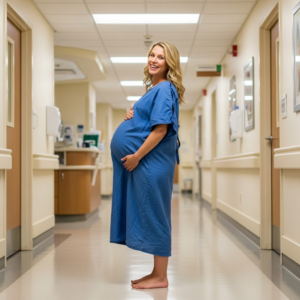
Prepared by Your Healthcare Team — For You & Your Family
—
OB/GYN Videos
Pregnancy Videos
Delivery Videos
💬 A Message From Your Doctor:
"Having a baby is one of the most amazing experiences of your life. We know it can feel exciting and a little scary at the same time. This handout is here to help you understand exactly what will happen — step by step — so you feel calm, confident, and ready. You are not alone. We are with you every step of the way. 💙"
🏠 When Should I Come to the Hospital?
You should come to the hospital right away if you notice any of these signs:
| What You Feel | What It Means |
|---|---|
| 🤰 Strong contractions every 5 minutes, lasting about 1 minute each | Labor may be starting |
| 💧 Water breaks (a gush or slow leak from your vagina) | Your bag of waters has broken |
| 🩸 Pink or bloody mucus discharge | Your cervix is getting ready |
| 👶 Baby is moving less than usual | Baby needs to be checked |
| 😟 Severe headache, blurry vision, or face swelling | Call your doctor immediately |
⚠️ When in doubt — call us or come in! It is always better to check.
🚗 What to Bring to the Hospital
Pack your hospital bag before 36 weeks. Here's a simple checklist:
- ✅ Your ID and health insurance card
- ✅ Your antenatal (pregnancy) records / booking card
- ✅ Comfortable clothes & a nightgown
- ✅ Slippers and socks
- ✅ Toiletries (toothbrush, soap, shampoo)
- ✅ Baby clothes, nappies & a blanket
- ✅ Snacks for your birth partner
- ✅ Your birth plan (if you have one)
- ✅ Phone charger
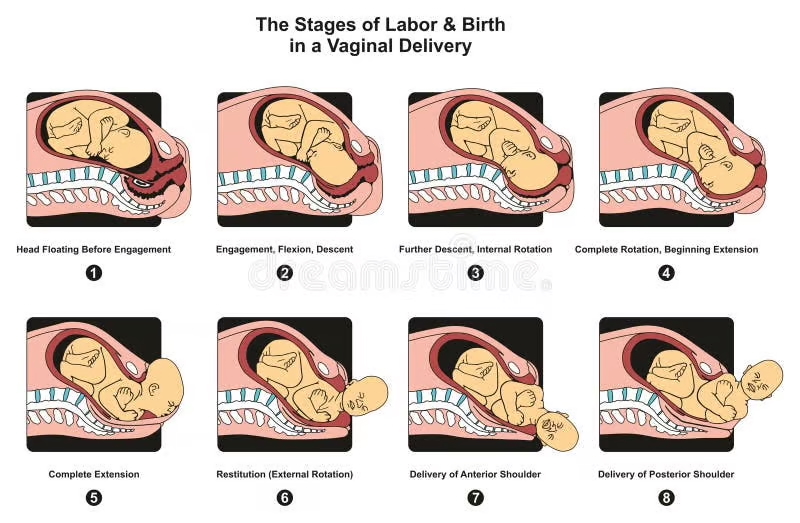
👶 What is a Normal Delivery?
A normal (vaginal) delivery means your baby is born through your birth canal — the natural way — without surgery. Your body is designed to do this. Millions of babies are born this way every day.
The process is divided into 3 main stages (plus a recovery period). Each stage has a purpose, and your medical team will be monitoring you closely at every step.
🔵 Stage 1 — Your Cervix Opens Up
This is usually the longest part of labor. Your uterus (womb) begins to contract (squeeze) to help open your cervix (the opening to your womb) wide enough for your baby to come out.
🟡 Early Labor (Cervix opens from 0 to about 6 cm)
What you'll feel:
- Mild to moderate cramps — like strong period pain
- Contractions that come and go — not yet regular at first
- Some pressure in your lower back or pelvis
- You may pass a pinkish mucus plug — this is completely normal!
How long does it last?
- First-time mums: Usually 6 to 12 hours (sometimes longer)
- Mums who've given birth before: Usually shorter
What you can do:
- 🚶♀️ Walk around or change positions — it helps your baby move down and can shorten labor
- 🛁 Take a warm bath or shower
- 💆 Ask your partner to rub your back
- 🍵 Drink water or clear fluids to stay hydrated
- 😴 Rest when you can — save your energy for pushing!
🟠 Active Labor (Cervix opens from 6 to 10 cm)
What you'll feel:
- Contractions become stronger, longer, and closer together
- Each contraction lasts about 45–60 seconds
- You may feel a lot of pressure in your pelvis
- It becomes harder to talk through contractions
What the medical team will do:
- Check your blood pressure and pulse regularly
- Listen to your baby's heartbeat (with a Doppler or monitor strapped to your tummy)
- Do gentle internal exams to check how open your cervix is (every 2–3 hours)
- Offer you pain relief options — ask about these anytime!
💊 Pain Relief Options — You Have Choices!
| Option | What It Is | Good To Know |
|---|---|---|
| Epidural | Injection in lower back that numbs pain | Most effective; you stay awake |
| Gas & Air (Entonox) | Breathing through a mask | Safe, mild relief |
| Pethidine / IV Opioids | Pain medicine through a drip | Can cause drowsiness |
| Warm Water / Bath | Soaking in warm water | Natural, very soothing |
| Massage & Breathing | Partner massage + guided breathing | Empowering, no medicine needed |
💬 You don't have to be in pain to ask for help. Speak up — we are here to help you feel as comfortable as possible.
🔴 Stage 2 — Pushing Your Baby Out!
Once your cervix is fully open (10 cm), it's time to push your baby into the world! 🎉
What you'll feel:
- A strong urge to push (like you need to have a bowel movement — this is normal!)
- Enormous pressure in your bottom and pelvis
- A burning or stretching feeling as the baby's head comes through
How to push:
- Take a deep breath, tuck your chin to your chest, and push DOWN — like you're bearing down
- Push with each contraction — rest between them
- Your doctor or midwife will guide you: "Push… push… push… now rest"
- Don't hold your breath for too long — short bursts of pushing are better
Helpful positions for pushing:
- 🛏️ Semi-sitting (most common)
- 🦵 Lying on your side
- 🙌 Hands and knees
- 🧎 Squatting (helps gravity!)
How long does pushing take?
- First-time mum: Up to 1–2 hours
- Second baby or more: Usually 15–30 minutes
What happens when the head appears:
- The doctor or midwife will say "Pant, don't push" — this helps prevent tearing
- Warm compresses will be placed on your perineum (area between vagina and bottom) to keep it soft
- The doctor will gently guide your baby's head out, then shoulders, then the whole body
🎉 Your Baby is Born!
- Your baby will be placed on your chest immediately (skin-to-skin)
- Your baby will cry — their first breath!
- The umbilical cord is clamped and cut (your partner can do this if they wish!)
🟣 Stage 3 — Delivering the Placenta
After your baby is born, there is one more small step — delivering the placenta (the bag that fed your baby for 9 months).
What you'll feel:
- Mild contractions again (much gentler than before)
- A small urge to push
What the team will do:
- Give you an injection of oxytocin (in your thigh or arm) to help your womb contract and reduce bleeding
- Gently pull the cord to help the placenta slide out
- Check the placenta is complete — this is very important
How long does it take?
- Usually just 5 to 30 minutes
🩷 After Birth — Your Recovery Time
The first 1–2 hours after birth are precious. Here's what to expect:
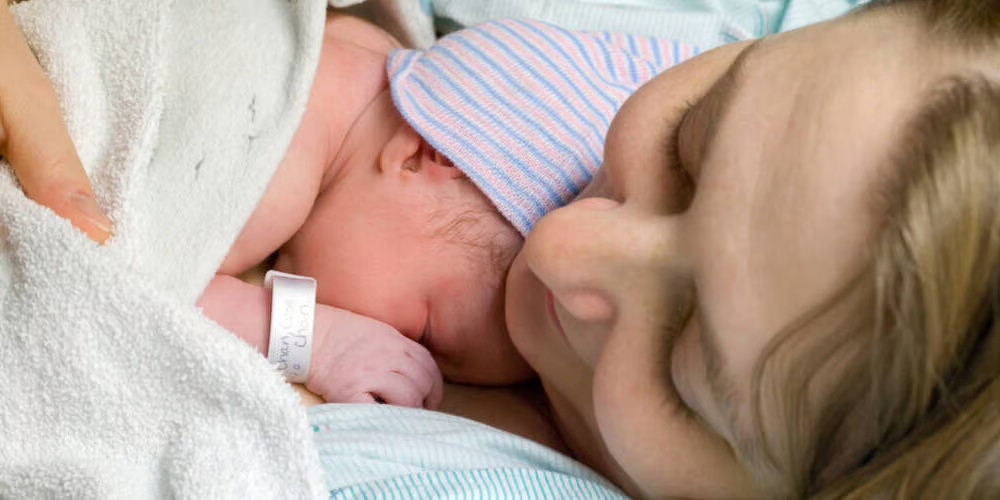
For YOU:
- Your blood pressure, pulse, and bleeding will be checked regularly
- If you have any small tears, the doctor will stitch them (with local anaesthetic — you won't feel pain)
- You may feel shaky, emotional, or euphoric — all completely normal!
- Drink water and eat a light snack when you feel ready
For YOUR BABY:
- Baby will be kept on your chest (skin-to-skin contact is the best thing for your baby!)
- Baby's temperature, breathing, and colour are checked
- Baby's weight, length, and head size are measured
- Baby will be given Vitamin K (injection or drops) to protect against bleeding
- Start breastfeeding as soon as possible — within the first hour is ideal

💬 Questions You Can Always Ask Your Doctor or Midwife
Here are some questions it's totally okay to ask — anytime:
- 🗣️ "How dilated am I right now?"
- 🗣️ "Is my baby okay? Can I hear the heartbeat?"
- 🗣️ "What pain relief do I have available?"
- 🗣️ "How much longer do you think it will be?"
- 🗣️ "Can my partner cut the cord?"
- 🗣️ "Can I hold my baby straight away?"
- 🗣️ "When can I start breastfeeding?"
💙 There are NO silly questions. We are here to support you.
🔔 Call Your Nurse or Doctor Immediately If:
- 🚨 You feel sudden, very severe pain that doesn't go away between contractions
- 🚨 Your baby suddenly stops moving
- 🚨 You see heavy, bright red bleeding
- 🚨 You feel faint, dizzy, or have trouble breathing
- 🚨 You have a very bad headache or can't see clearly
🌟 You've Got This — A Summary at a Glance
🔵 STAGE 1 — EARLY LABOR
   ↓ Mild contractions → Cervix opens to 6 cm
   ↓ Walk, rest, breathe, stay hydrated

🟠 STAGE 1 — ACTIVE LABOR
   ↓ Strong contractions → Cervix opens to 10 cm
   ↓ Pain relief available — ask anytime!

🔴 STAGE 2 — PUSH!
   ↓ Cervix fully open → PUSH with contractions
   ↓ Baby is born! 🎉 Skin-to-skin starts immediately

🟣 STAGE 3 — PLACENTA
   ↓ Gentle push → Placenta delivered
   ↓ Oxytocin injection to stop bleeding

🩷 RECOVERY
   ↓ Rest, bond, breastfeed, be monitored
   ↓ You did it! Welcome, baby! 👶
📞 Important Contact Numbers
| 🏥 Labour Ward | __ |
| 🩺 Your Doctor / Midwife | __ |
| 📱 Emergency | __ |
| 👩⚕️ Antenatal Clinic | __ |
💛 Remember: Your body was made for this. Trust yourself, trust your team, and breathe.
Wishing you a safe, smooth, and joyful delivery! 🌸👶
— Your Healthcare Team
—
This handout is for general information. Always follow the advice of your personal doctor or midwife.